

Locations
The Folkestone Triennial, which was founded in 2008, invites internationally acclaimed artists to use the town as their gallery. Every three years, around twenty artworks are commissioned in response to Folkestone’s rich coastal landscape, layered history and complex present. The result is a powerful, site-specific exhibition in public space – offering a bold, thought-provoking encounter with art in the everyday. Many artworks remain in place and contribute towards the Folkestone Artworks exhibition.
The first two books in Jo’s Folkestone-based crime series feature many of the artworks, some of which still remain in situ. But the town as a whole never fails to inspire and provide the perfect setting for the books.
The following are just some of those exhibits and locations.
The Samuel Peto
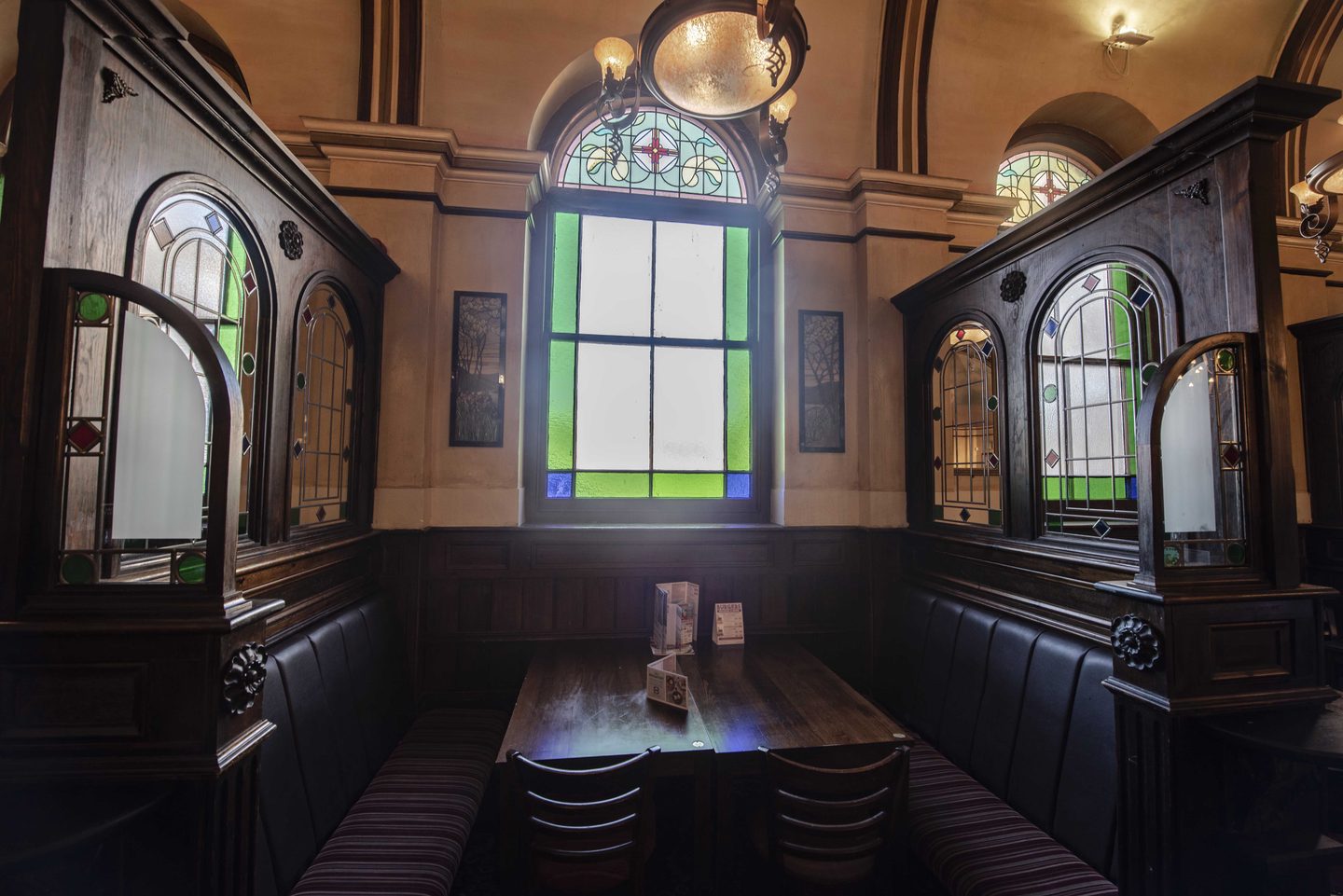
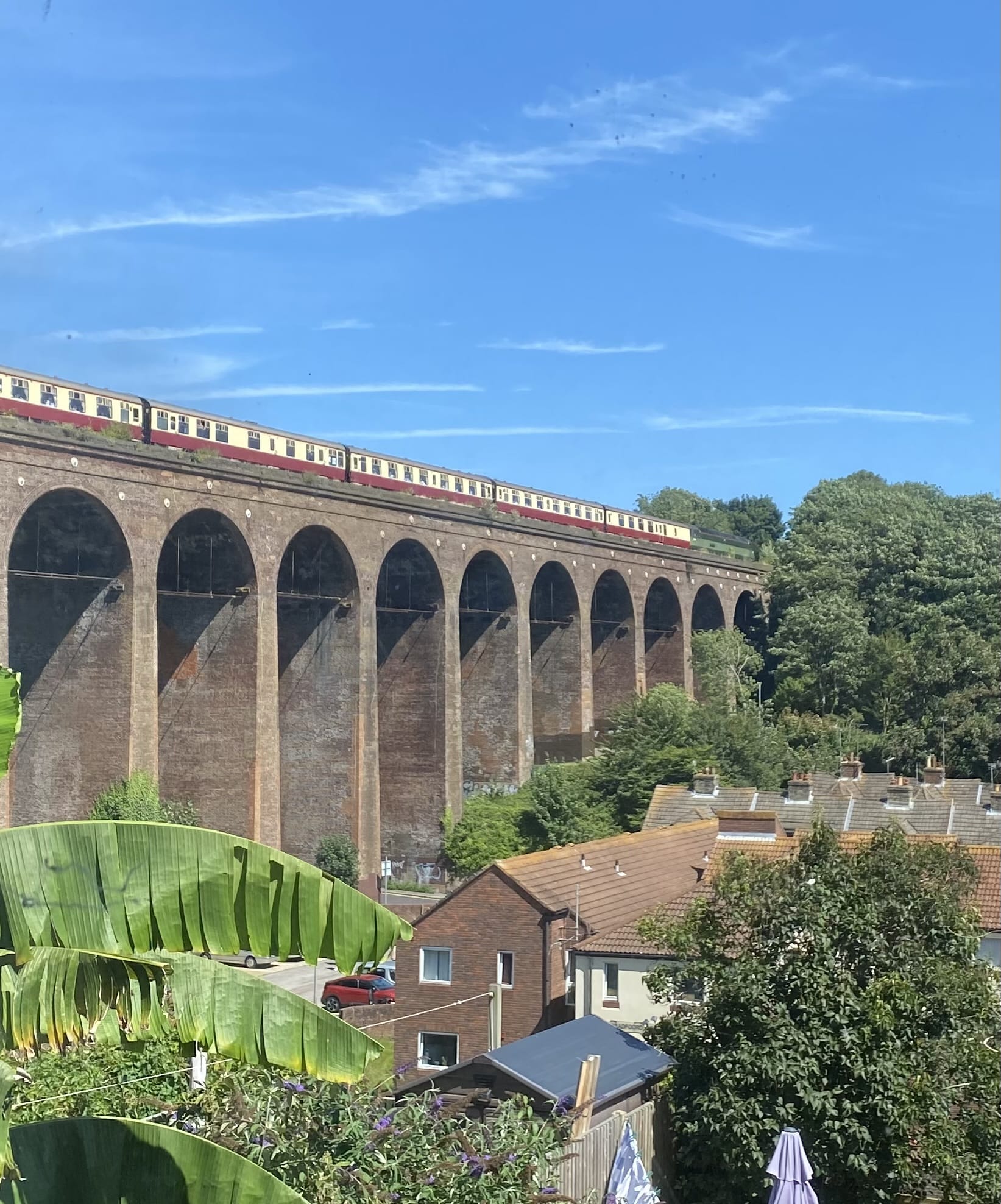
The Samuel Peto is the meeting place of Amy and Jenny’s writing group in The Write Way to Die. Originally a Salem Chapel, the building now houses a Wetherspoons pub. Funded from a loan by MP and Baptist Samuel Peto, who was one of the great railway contractors of the Victorian age, the building is as grand inside as out. Peto’s construction firm was also responsible for building the 19-arch Foord Road Viaduct, which towers to 100-feet, and stretches from Amy’s house at one end to Willem’s at the other. Amy watches the trains cross the viaduct when she’s writing, including the Orient Express.


Holiday Home: Richard Woods, 2017
Holiday Home comprises six one-third size brightly coloured ‘homes’ built in ‘unlikely’ places – suggesting that no site is too small, too unlikely, or too inconvenient for its neighbours, for a holiday home. The orange and pink houses remain in situ down at the Harbour.
The Holiday Homes are Jo’s favourite of all the Triennial pieces, and she never tires of seeing the pink house floating in the harbour.

Halfway to Heaven: Emily Peasgood, 2017
An interactive sound installation in the Baptist burial ground on Bradstone Road, Halfway to Heaven linked audio channels to individual gravestones, with musical narratives and references to the history of the now inaccessible and overgrown graveyard.
Genuine Fake: Rachel Stella Jenkins, 2021
Taking its inspiration from the Rotunda amusement arcades that drew crowds to the beach until the 1990s, FORTUNE HERE was a pavilion and visitor experience located near the site of the now demolished domed buildings from which the Rotunda got its name. The pavilion contained themed games and a crazy golf course – addressing significant contemporary topics that affected both local residents and Europe’s wider population.
Beautiful Sunday: Jacqueline Donachie, 2021
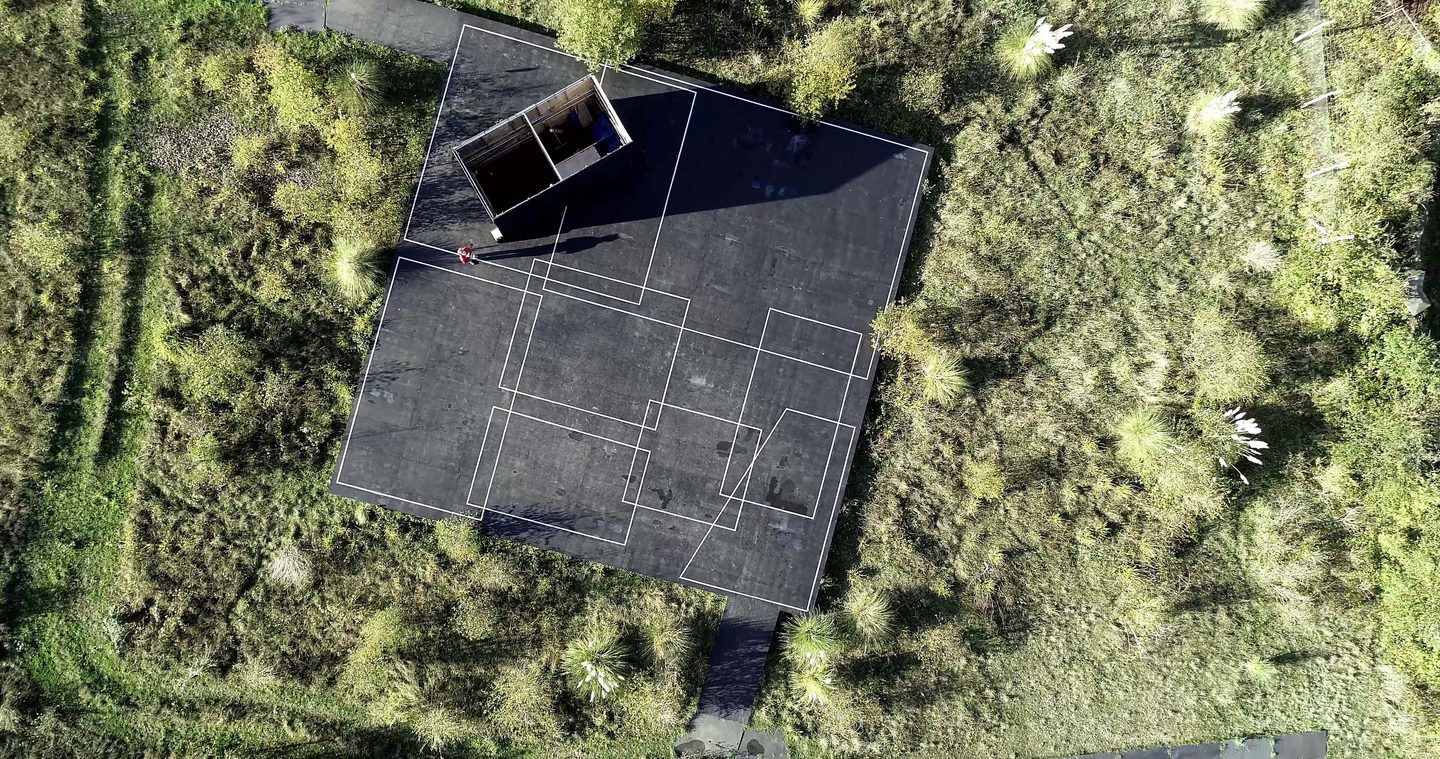
Beautiful Sunday was a sculptural installation that celebrated ‘all the dance floors of Folkestone’ by marking out their size one-to-one on a huge stage set in the middle of the derelict gasworks site. Visitors were invited to stand on the stage and remember the dance floors – many of which are no longer active. The stage was energised by a huge screen showing a film that documented a line dance indigenous to Glasgow: The Slosh.
Flock of Seagulls Bag of Stolen Chips: Morag Myerscough, 2021
Flock of Seagulls Bag of Stolen Chips is a gateway or ‘welcome pavilion’ for the former gasworks site at Ship Street, from where visitors could view the entire site and imagine how it might be developed in the future. Its cylindrical form and its open lattice-work metal construction echoed the gasometers that once stood on the site, while its brightly painted panels suggested an altogether more post-industrial atmosphere. The words on the panels were suggested by local residents.

Pent Houses: Diane Dever and Jonathan Wright, 2014

The five sculptures, based loosely on the water towers of old above the streets of New York, have been placed along the line of the hidden waterways of the Pent Stream, mapping its course under the streets of East Folkestone. These waterways were the foundation of Folkestone’s past prosperity, creating the harbour which attracted the initial human settlement, and providing not only fresh water to its inhabitants but also, in the post medieval period, a source of power for industrial mills. The search for building land near the town centre saw the streams culverted in the nineteenth century, and today the water flows untapped, unused and unseen from the hills to the outflow at Folkestone Harbour.
In the current climate of increased awareness about the pressures on natural resources and the associated costs, flowing water is once again seen as a precious asset. The presence of water increases the value of real estate, hence the clever play of words in the title: Pent Houses.
Janus Fortress: Folkestone: Pilar Quinteros, 2021
Janus’ Fortress: Folkestone was a monumental sculptural head with two faces, representing Janus, the Roman god of beginnings and transitions, who was often associated with thresholds.
The sculpture was located high up on the East Cliff, overlooking Folkestone’s harbour, and with its two faces was able to look both towards the European mainland and towards England, connecting them, as Folkestone did whether as a fortress or a port. It was made of chalk and plaster, and gradually eroded away. The artist’s intention was to make a kind of anti-monument, imposing in scale but ephemeral and vulnerable. Its disintegration also mirrored the gradual erosion of the chalk cliffs and coastline.

No. 1054 Arpeggio: Rana Begum, 2021
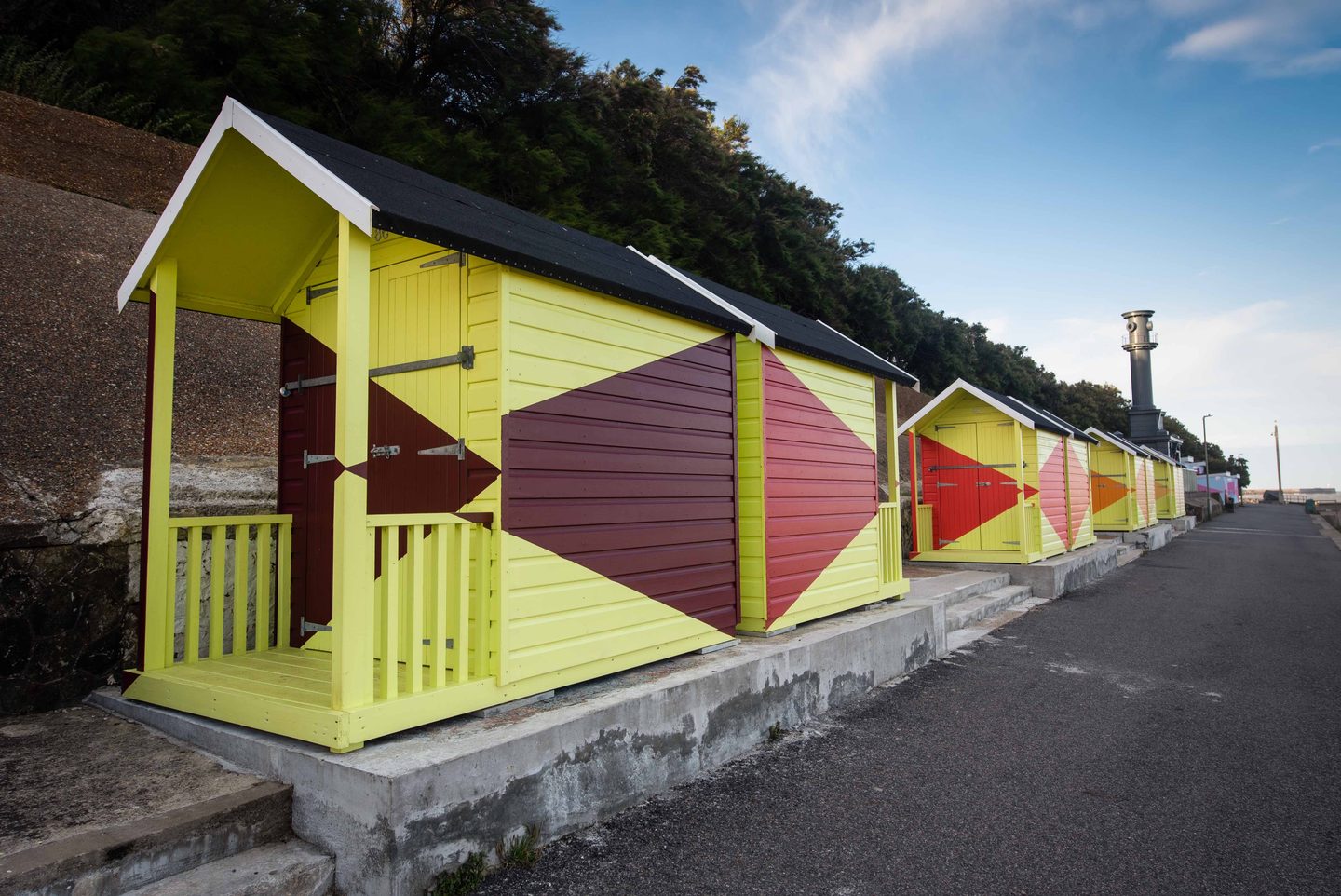
No. 1054 Arpeggio saw the artist transform around 120 beach huts on the seafront between Folkestone and Sandgate along Lower Saxon Way. The number refers to the sequence of the artist’s completed artworks, while an ‘arpeggio’ is a sequence of notes from a chord played in a rising or descending order.
The graduated colour scheme, and the artist’s trademark chevron design, have turned a half-mile marching rank of beach huts into notes of colour on a keyboard.
The Pilot Bar
The Pilot bar is located right on the beach next to the Harbour Arm, and you can see the coast of France on a clear day. Housed in a converted shipping container, with its Waltzer and Dodgem seating on the pebbles, it’s where Jenny meets her dodgy London friend ‘Spud’.


The Old High Street

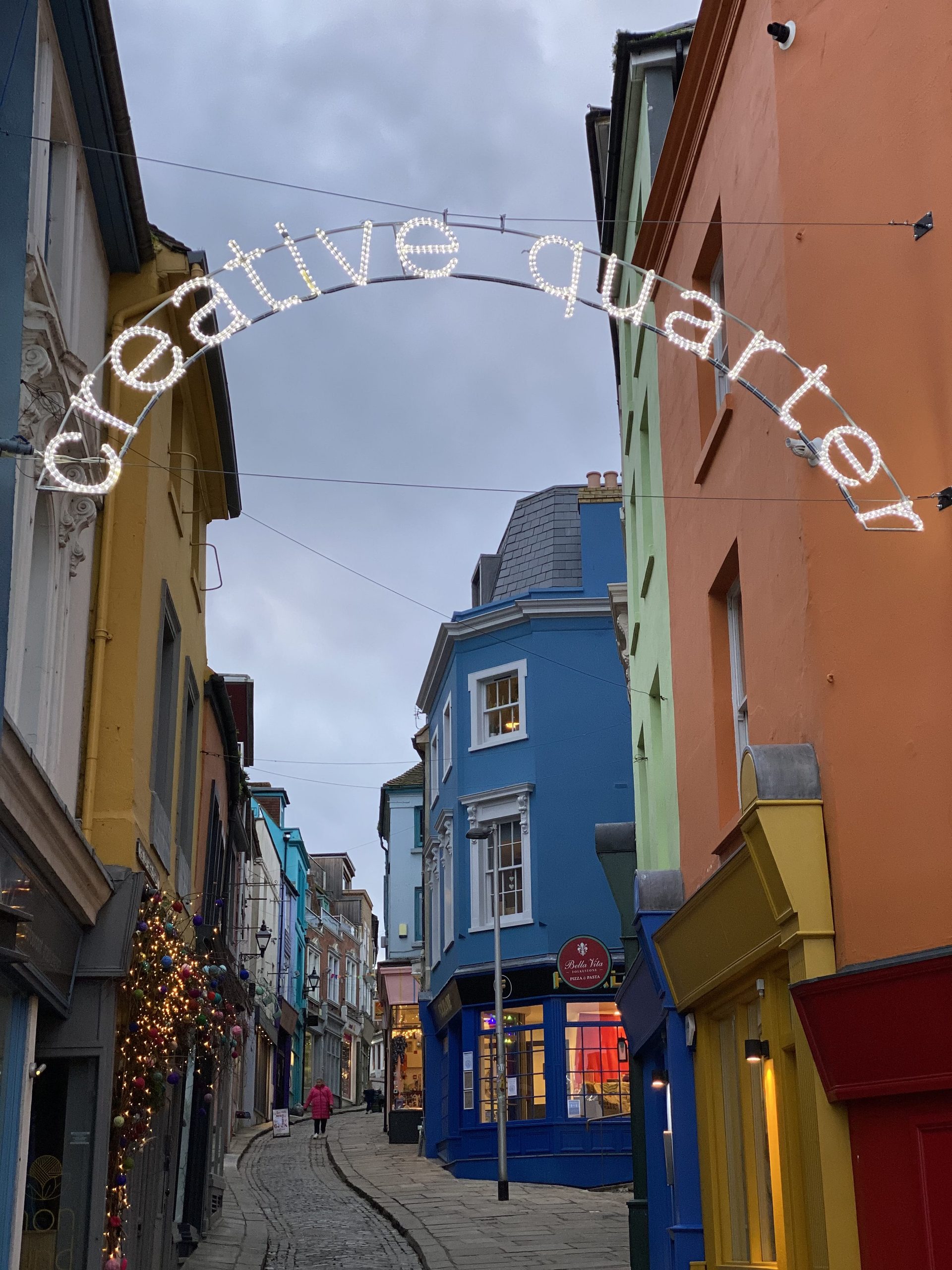
The Old High Street is a steep, colourful, cobbled street filled with a wide range of independent shops, restaurants, cafes and galleries. It is the location of the fictional ‘Coastal Creative’ shop featured in the crime series.
The Harbour Arm Market Place
The Harbour Arm Marketplace is comprised of thirty-five fisherman-style huts with a colourful array of independent businesses, ranging from jewellers, clothing, homewares, art, and more. The market is transformed into a Festive Market in November and December, complete with enormous Christmas tree and snow machines.
The Big Screen
The Big Screen is located in the Goods Yard at Folkestone Harbour and shows sports and cinema throughout the year.
I Am Argonaut: Jason Wilsher-Mills, 2021
A contemporary figurative sculpture, I Am Argonaut stood ‘in conversation’ with the monumental statue of William Harvey, son of the Mayor of Folkestone, Royal Physician and discoverer of the circulation of the blood. This dialogue has a very particular and personal significance for Jason, since his disabilities have been caused by a disease of the blood in his childhood. For him it was an opportunity to pay his respects to a great scientist whose studies paved the way for some of the great advances of modern medicine.


The Mobile Gull Appreciation Unit: Mark Dion, 2008

Dion’s staffed mobile unit made in the shape of a seagull provided information about these often unloved birds, including evolution, ethnology, natural history, environmental status and folklore. The giant gull can still be seen in the town.
Mellowing the Corners: Mariko Hori 2021
The artist was inspired by the Zig-Zag Path, built in the 1920s from Pulhamite to appear as natural rocks and grottos on the face of the Leas Cliff.
Mellowing the Corners consisted of newly made Pulhamite ‘boulders’, on three different sites: fake rocks that could be personified as ‘trying to act naturally’ to blend in with their environment. While the surface coating of the rocks on the Leas Cliff are now wearing away to reveal the inorganic rubbish used as bulking material, the boulders of Mellowing the Corners contain objects donated by residents – which will also begin to reappear over the next 100 years as the corners of the rocks are worn away by weather and human use.


The Lower Leas Amphitheatre
The Lower Leas Amphitheatre is a 350-seat open-air venue right next to the beach, and hosts a diverse programme of community events, live music and professional theatre throughout the summer. The surrounding linear park occupies a historic landslip area under the cliffs, creating a sheltered microclimate that fosters rare coastal wildlife.
The Bayle Pond
The Bayle Pond is the terminus of a unique 12th/13th century aqueduct which carried water into Folkestone from a spring at Cherry Garden Coombe. The pond covered the whole of the garden until the 1920s when it was landscaped.
Thomas Taylor’s pork butchers shop
Thomas Taylor’s pork butchers shop was located at 86 The Bayle, and much beloved in the town until it closed in 1973. It was then occupied by the Witches Workshop, run by Aunt Sally Witchqueen, before being converted into living accommodation in 1997.
Folkestone Creative Quarter
Folkestone Creative Quarter is an urban village of designers, filmmakers, musicians, web developers and artists, with shops, galleries, bars and more. It was developed by Creative Folkestone, an arts charity launched in 2002, and is a thriving community which encourages and enables creativity in all forms. It is also home to Folkestone Quarterhouse – a venue for theatre, comedy music and festivals, including the Folkestone Book Festival.
Another Time XVIII 2013: Antony Gormley, 2017

Another Time 1999-2013 is a series of one hundred solid cast-iron figures, dispersed around the world. The artist loaned three for Folkestone Triennial (two sited in Folkestone and one, in a collaboration with Turner Contemporary, in Margate in front of the Gallery). The artist intended them to ‘bear witness to what it is like to be alive and alone in space and time’ and to ‘celebrate the still and silent nature of sculpture. The work is designed to be placed within the flow of lived time.’ All three figures stood within the ebb and flow of the tide, at times partly inundated. Of the two Folkestone figures, the one in the Loading Bay underneath the Harbour Arm remains.